Day 2 Highlights: Sensitive Reporting Training
May 13th, 2026
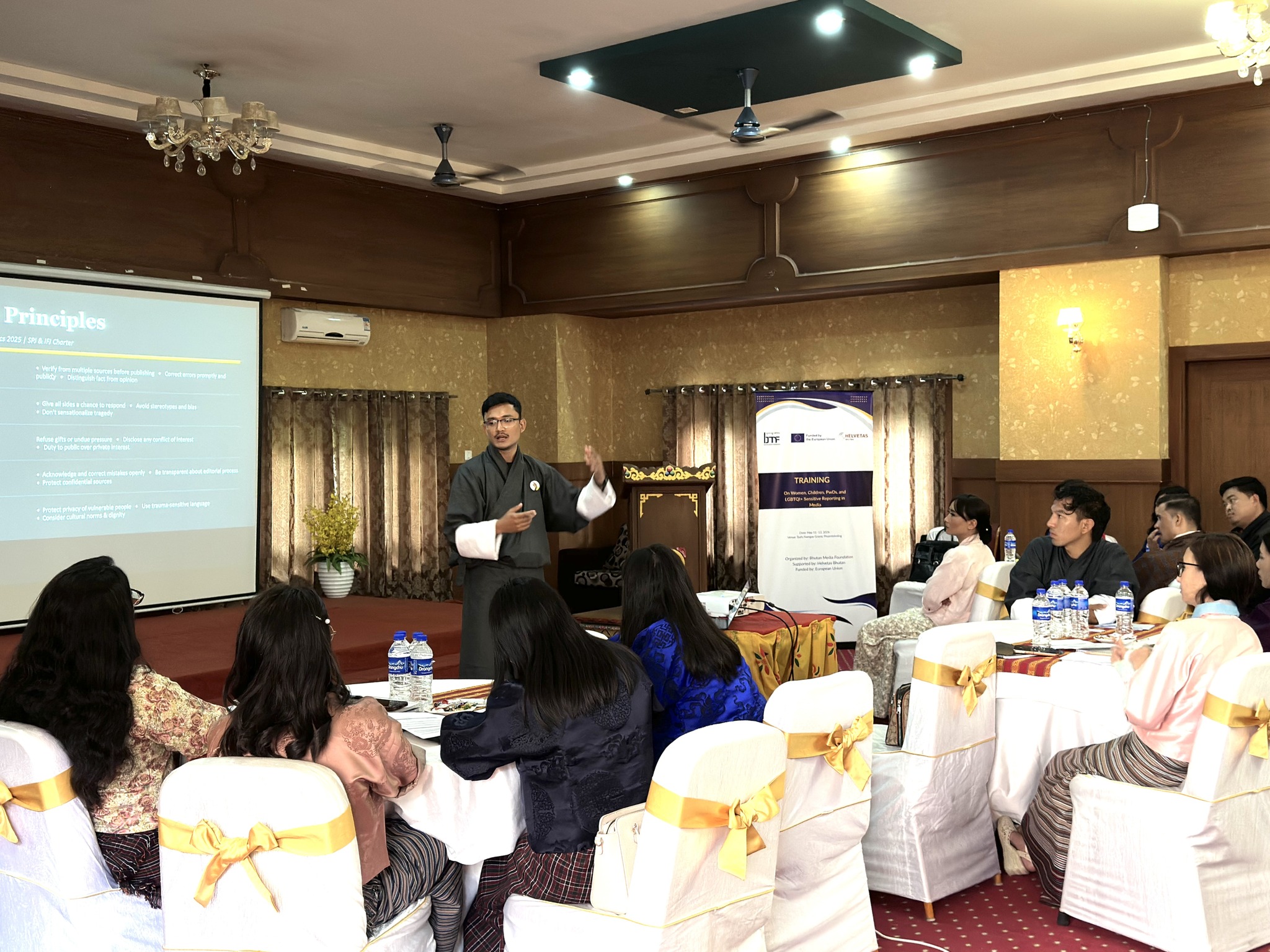
Building on the discussions from Day 1, the second day of the Training on Media Reporting on Women, Children, Persons with Disabilities (PwDs), and LGBTQI+ Communities focused on strengthening ethical, inclusive, and rights-based journalism practices. Through interactive and practical sessions, participants explored the media’s role in promoting dignity, challenging stereotypes, and ensuring responsible reporting on sensitive issues.
Mr. Sherub Dorji led an engaging session on ‘Media Ethics and Responsible Journalism,’ where participants explored real-life reporting dilemmas, including coverage involving minors, interviewing trauma survivors, and navigating editorial pressure for sensational content.
The discussions continued with a session on ‘Ethical Media Coverage and Interviewing of Vulnerable Groups,’ during which participants practiced reframing interview questions to uphold dignity, minimize harm, and ensure respectful engagement.
Another key session focused on ‘Inclusive Reporting on Disability: Language, Representation, and Best Practices,’ highlighting the importance of respectful terminology, accurate representation, and avoiding pity-based narratives in both written and visual storytelling.
In the afternoon, Mr. Samten Wangchuk facilitated a session titled ‘From Awareness to Accountability: How Media Shapes Public Perception of Disability.’ He emphasized the influential role of journalism in shaping societal attitudes and encouraged participants to move beyond stereotypical portrayals of persons with disabilities as either “inspirational” or “tragic,” and instead promote balanced, rights-based, and everyday representations in media coverage.
The day concluded with a hands-on workshop where participants developed short disability-inclusive news stories and received peer feedback on their reporting approaches.
35 media professionals are attending the training, and it is organized by the Bhutan Media Foundation (BMF), supported by Helvetas Bhutan and funded by the EU in India.