Bhutan Media Forum Calls for Robust Media Amid AI emergence
April 1st, 2026
Published by: Thinley Namgay, Reporter, Kuensel, 1 April, 2026
As artificial intelligence (AI) and digital transformation reshape the modern world, media houses must deliver accurate, timely, and credible information while adapting to new technologies without compromising editorial standards.
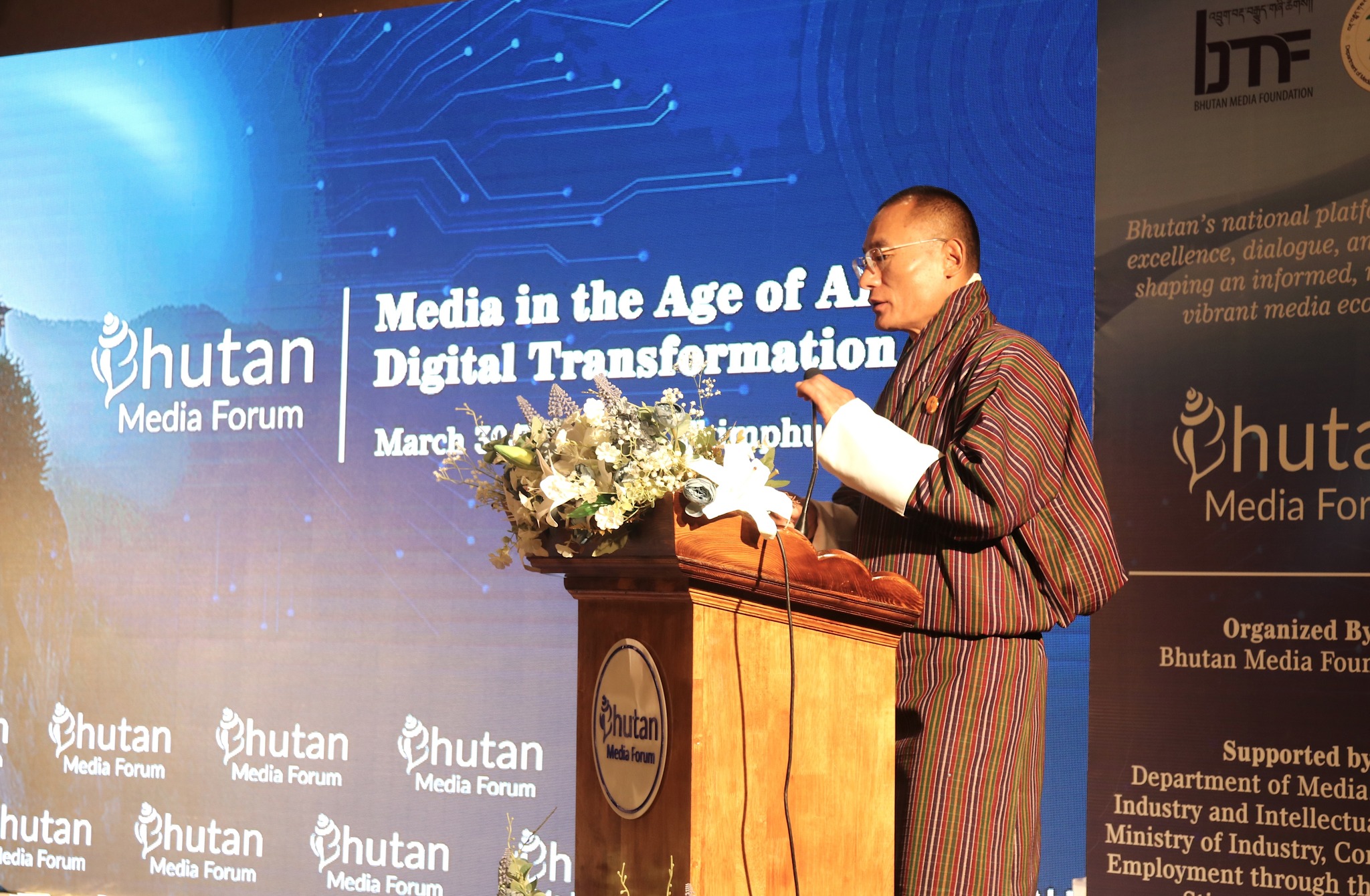
These were the key messages from the Bhutan Media Forum 2026, held in Thimphu from March 30 to 31 under the theme “Media in the Age of AI and Digital Transformation.”
The forum, organised by the Bhutan Media Foundation, serves as a national platform for media excellence, dialogue, innovation, and collaboration. More than 200 media professionals, policymakers, academics, civil society representatives, influencers, and students participated in the two-day event.
AI poses significant risks to media today due to the rapid spread of misinformation, disinformation, deepfakes, biased opinions, and other AI-generated content. These challenges threaten public trust in mainstream media.
However, the forum called for continued efforts from the media to strengthen ethics, fact-checking, and transparency to counter these growing challenges. While acknowledging AI’s potential, the forum asserted that media houses must develop their own standard operating procedures for its use.
The forum covered a wide range of topics, including “AI and Media Ethics: Insights from Around the World,” “Misinformation, Disinformation, and Public Trust: The Role of Mainstream Media,” “Rewriting the Rules: Mobile-First and AI-Driven Journalism,” and “Social Media Influencers: Collaborate, Compete, or Coexist?” “Sustaining Community Media (Radio) in a Digital Era,” and “Innovation in News Media: Adapting to Change and Thriving into the Future.”
During the event, Prime Minister Tshering Tobgay said that the media’s role is especially important amid the emergence of AI and that the government would continue to support the media.
He added that the media must always uphold the truth and report with balanced views from different parties. Lyonchhen said that in a small country like Bhutan with a small population, the media’s impact is immense because it shapes public opinion.
While AI continues to shape people’s lives, panellists pointed out limitations in the country’s legal framework for addressing AI-related issues. They called for changes to current legislation.
A 2024 parliamentary review, for instance, stated that Bhutan’s Information, Communication and Media (ICM) Act is unable to address emerging digital threats.
Eminent Member of the National Council Kesang Chuki Dorjee expressed that although the country has the ICM Act and the Penal Code, these laws do not adequately address many AI-related issues.
However, the GovTech Agency is working on solutions to address these legal gaps.
GovTech Agency’s Deputy Chief ICT Officer, Tenzin Namgyel, said the agency is reviewing the ICM Act 2018 because it currently lacks provisions to address AI-related misinformation or disinformation.
Other issues affecting media were also discussed during the forum. Shrinking revenue for print media, lack of timely access to information, and bureaucratic hurdles remain major challenges for Bhutanese media houses. In response to the changing social media landscape, media houses are also expanding their online presence.
Moreover, government agencies are increasingly placing advertisements on their own social media platforms, diverting some advertising work to social media influencers.
Panellists said that while social media influencers may promote content based on commercial agreements, mainstream media remain more relevant in upholding credibility and public trust.